
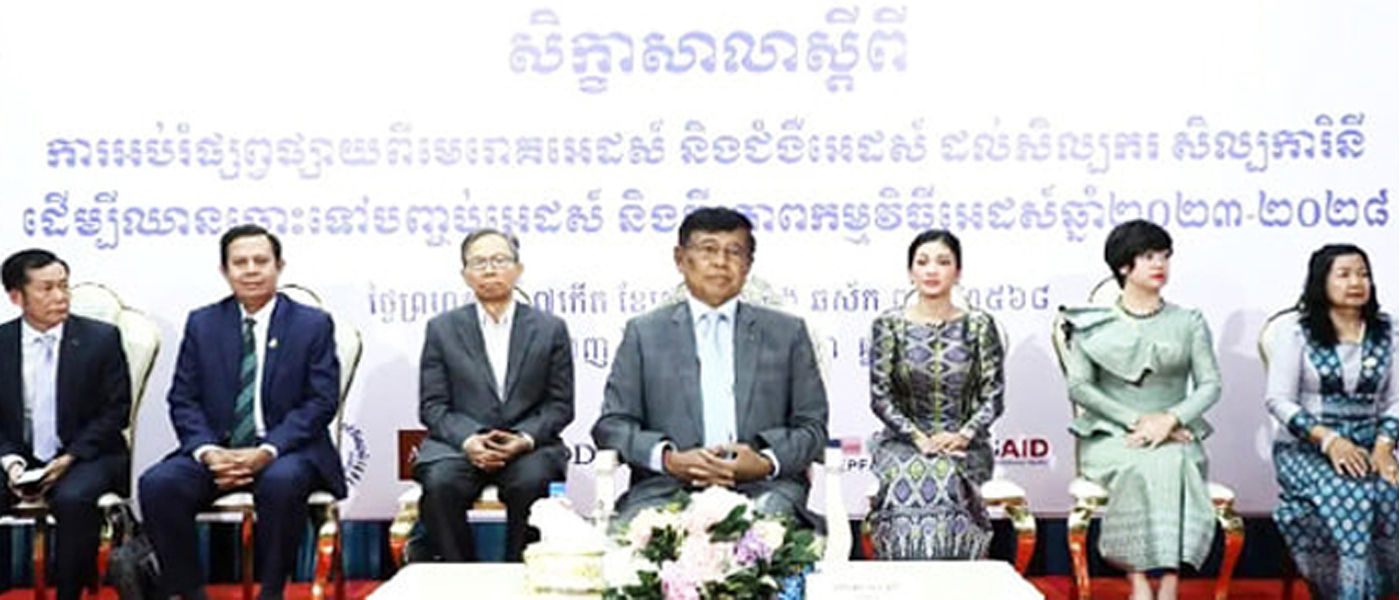
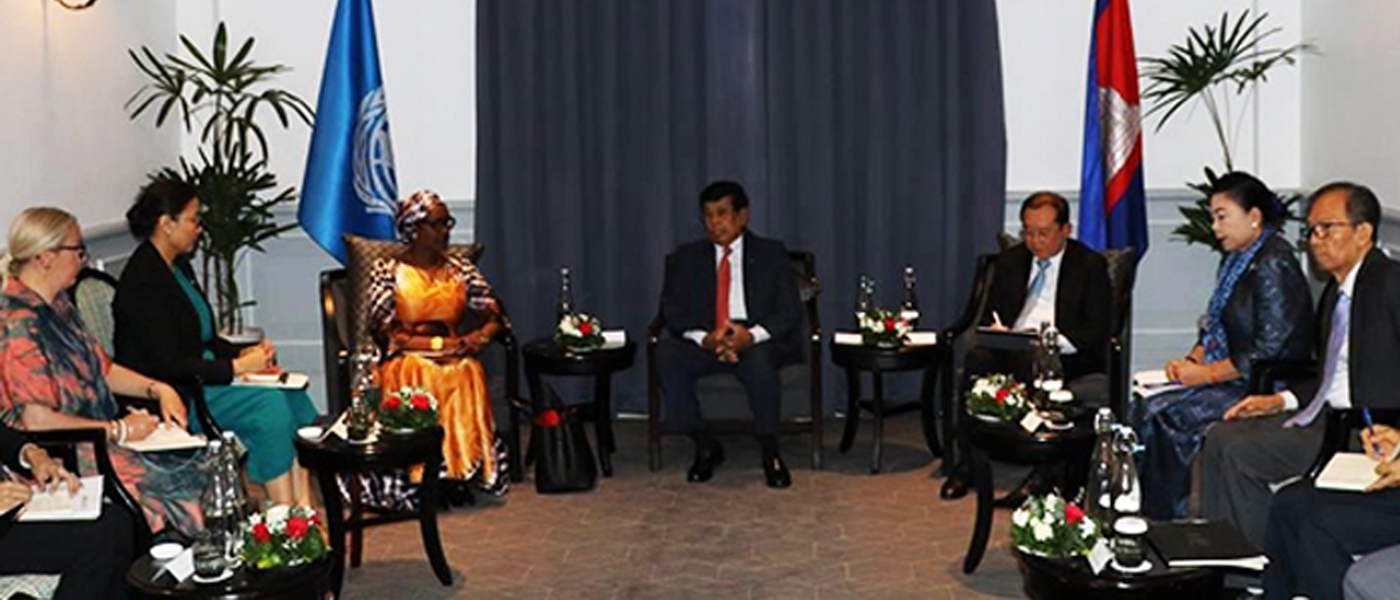

PHNOM PENH — On December 1, World AIDS Day 2025, Cambodia is renewing its commitment to eliminate HIV as a public health threat by 2028.
While the country has achieved remarkable progress in testing, treatment, and viral suppression, new challenges—including stigma, funding shortages, and thousands of people living with HIV who remain undiagnosed—underscore the need for sustained national and international action.
Observed under the theme “Overcoming Disruption, Transforming the AIDS Response,” World AIDS Day highlights Cambodia’s leadership in the Asia-Pacific region and its ongoing efforts to achieve the national HIV/AIDS goals. In a message on November 29, Prime Minister Hun Manet praised the country’s achievements in HIV prevention and treatment, while emphasizing that HIV remains a serious public health threat.
“This year’s theme is an opportunity to reflect on the impacts of our HIV response amid new challenges, including international funding shortages, and to showcase the resilience of our communities in sustaining progress,” Hun Manet said.
He called on national authorities, healthcare workers, and international partners to intensify efforts to ensure that every person living with HIV receives timely testing and treatment.
Cambodia currently has approximately 76,000 people living with HIV (PLHIV). Of these, 71,716 know their status and are receiving antiretroviral therapy (ART)—the highest coverage in the Asia-Pacific region.
New HIV infections declined from 1,500 in 2023 to 1,200 in 2024, while deaths among PLHIV fell from 1,100 to 1,000 over the same period, demonstrating the effectiveness of Cambodia’s national HIV/AIDS policies. These statistics underscore the country’s progress toward global targets, even as challenges persist.
PLHIV are recognized as a vulnerable group and benefit from social protection programs. Between the first quarter of 2022 and September 2025, 53,821 PLHIV received the equity ID-Poor card, enabling access to healthcare and covering 75 percent of those undergoing treatment.
Additionally, 15,454 people from key populations—including young people, men who have sex with men, transgender individuals, female entertainment workers, and people who inject drugs—received the card by early 2025. These efforts ensure that vulnerable communities can access testing, treatment, and care without financial barriers.
Despite these gains, challenges remain. Over 4,000 PLHIV in Cambodia are unaware of their status and are not receiving treatment. Stigma, discrimination, lack of public awareness, and funding gaps continue to hinder effective prevention and care efforts.
The prime minister emphasized that while Cambodia’s national efforts have been highly successful, international support remains essential to close remaining gaps, address legal and social barriers, and empower communities to take the lead in HIV response programs.
Coordinated Efforts Across All Levels
The Cambodian government is strengthening its national HIV response system to foster closer collaboration among development partners, national and international organizations, and sub-national authorities. Awareness campaigns aim to eliminate stigma and discrimination and encourage high-risk groups to get tested, with same-day ART initiation for those diagnosed HIV-positive.
Prevention methods—including condom use, pre-exposure prophylaxis (PrEP), post-exposure prophylaxis (PEP), and routine testing—are widely promoted. The country has also successfully prevented mother-to-child transmission of HIV, ensuring that babies born to HIV-positive mothers remain HIV-free. These prevention strategies, combined with early detection and immediate treatment, have been central to Cambodia’s success.
Since the mid-1990s, Cambodia has pursued the UNAIDS 95-95-95 targets: 95 percent of PLHIV knowing their status, 95 percent of those receiving treatment, and 95 percent achieving viral suppression (U=U status, meaning an undetectable virus cannot be transmitted).
Cambodia has already achieved 92-100-98, surpassing global averages and outpacing the Asia-Pacific regional decline rate threefold. These results demonstrate that the country is not only meeting international targets but is doing so at an accelerated pace compared with neighboring countries.
Prime Minister Hun Manet urged authorities at all levels to build on these successes and continue efforts toward eliminating HIV as a public health threat. He called on the Ministry of Health to adopt innovative, efficient approaches in prevention and treatment programs, aiming to reduce new infections and deaths to fewer than 200 annually.
The Health Ministry, in collaboration with the Ministry of Planning, the National Social Protection Council, and the National Social Security Fund, will continue to provide ID-Poor cards to PLHIV and key populations. These initiatives strengthen the link between social protection and healthcare delivery, ensuring that no one is left behind.
Hun Manet also highlighted the importance of community empowerment. “Communities are at the forefront of the HIV response,” he said. “By supporting community-led initiatives, we can sustain the progress we have made and reach those who remain most vulnerable.”
Grassroots engagement has played a critical role in reaching hidden populations and delivering essential education, testing, and treatment services, particularly in rural and underserved areas.
In his December 1 statement, the prime minister stressed that HIV/AIDS continues to be a pressing public health concern, requiring continuous, coordinated responses. The government’s efforts aim to ensure that all PLHIV have access to care, that new infections are minimized, and that Cambodia achieves the Sustainable Development Goal 3 target of ending AIDS by 2030.
Cambodia’s experience demonstrates that even amid disruptions—such as funding shortfalls, social stigma, and emerging public health challenges—progress is possible with strong government leadership, community engagement, and international support.
The country’s achievements in HIV testing, treatment, and viral suppression provide a model for other nations in the region, showing that sustained, inclusive, and innovative approaches can bring the goal of ending AIDS within reach.